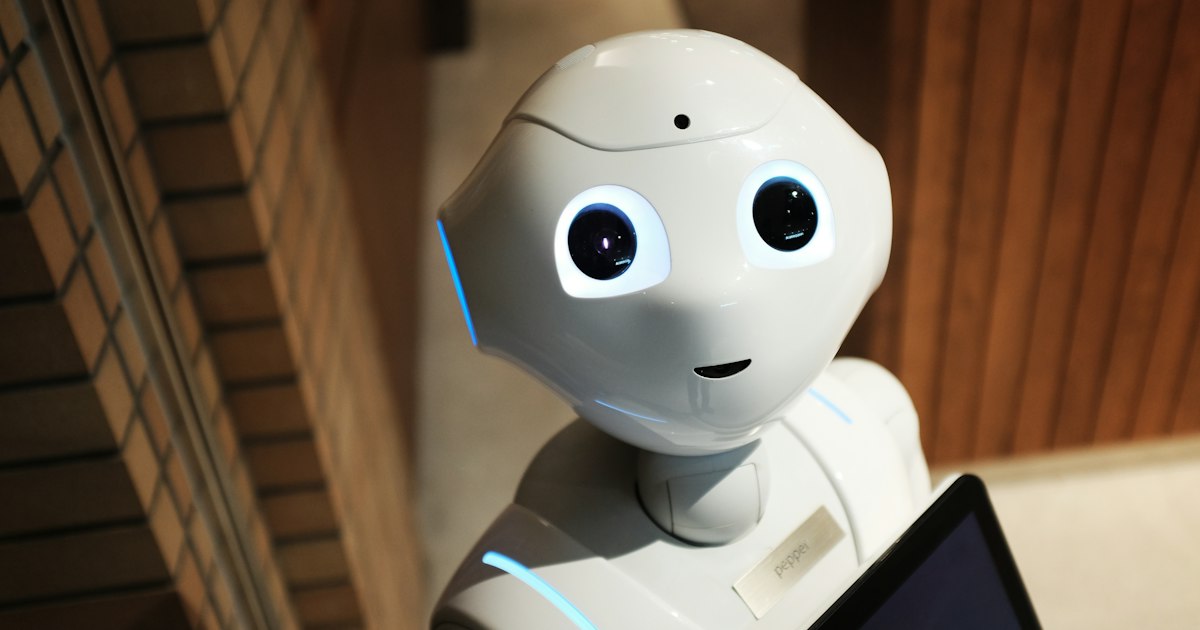
Robotics and Automation: The Future of Work
Robots as a Service (RaaS) democratizes robotics access. RPA automates office tasks. Robotics moves from factories to retail, hospitality, and home.
James Pérez
Solution Architect · +17 years experience · February 3, 2026
Robots as a Service: Democratizing Robotics
Robots as a Service (RaaS) is a model where companies deploy, upgrade, and manage robotic fleets on-demand, paying subscription instead of upfront CAPEX. This dramatically reduces the entry barrier: instead of investing $100K+ in purchasing robots, companies pay $2-5K/month for robots-as-a-service.
RaaS includes hardware (robots), software (control systems), maintenance (repairs, upgrades), and support (training, optimization). Providers like Boston Dynamics, Fetch Robotics, Kindred AI, and others offer fleets of robots for logistics, manufacturing, and services that scale with demand.
The RaaS model also reduces risk: if a robot doesn't meet expectations, it can be returned without sunk costs. Maintenance and upgrades are the provider's responsibility, not the customer's. This opex model makes robotics accessible to SMBs, not just large enterprises.
Robotics Applications in 2026
Logistics and Warehousing
AMRs (Autonomous Mobile Robots) transporting inventory, picking robots selecting orders, drones for delivery.
Retail and Hospitality
Robots stocking shelves, cleaning floors, assisting customers, and delivering food/hotel amenities.
Healthcare Assistance
Robots delivering medications, assisting in surgery, sanitizing facilities, and accompanying elderly patients.
Smart Manufacturing
Cobots (collaborative robots) working alongside humans in assembly, packaging, and quality control.
Autonomous Agriculture
Autonomous tractors, drones monitoring crops, robots harvesting fruits/vegetables with precision.
RPA Office Automation
Software bots automating repetitive tasks: data entry, invoice processing, email responses, report generation.
RPA: Robotic Process Automation
RPA (Robotic Process Automation) uses software robots (bots) to automate repetitive, rule-based tasks in office environments. Unlike physical robotics, RPA automates digital workflows: data entry, form filling, document processing, email responses, report generation.
Modern RPA integrates with AI for more intelligent tasks. RPA + AI can process unstructured data (invoices, contracts, emails), make decisions based on rules, and handle exceptions. This is called Intelligent Automation (IA) or Hyperautomation.
RPA use cases include: finance (invoice processing, reconciliation, reporting), HR (onboarding, payroll, benefits administration), customer service (ticket routing, responses, knowledge base lookup), and compliance (KYC, AML checks, audit trails).
Robotics Enabling Technologies
Computer Vision
AI enabling robots to "see" and understand visual environment for navigation, object detection, and manipulation.
SLAM (Simultaneous Localization)
Algorithms allowing robots to map unknown environments and localize themselves within in real-time.
Cobots (Collaborative Robots)
Robots designed to work safely alongside humans without safety cages, with force-limiting and sensors.
Grippers and End Effectors
Specialized "hands" enabling robots to manipulate diverse objects: suction cups, soft grippers, dexterous hands.
Fleet Management
Software coordinating multiple robots, optimizing routes and schedules, and preventing collisions.
Digital Twins
Virtual replicas of physical systems for simulation, testing, and optimization before physical deployment.
The Future: Humanoids and Beyond
Humanoid robots like Tesla Optimus, Figure 01, and Boston Dynamics Atlas are advancing rapidly. These bipedal robots with two arms can navigate environments designed for humans (stairs, doorknobs, tools) and perform tasks traditionally done by people.
The long-term vision is humanoid robots in homes, offices, and factories performing tasks from cleaning and cooking to assembly and delivery. Integrated AI (especially vision and language models) is critical for these robots to understand commands, navigate environments, and manipulate objects dexterously.
The remaining challenges include battery life (humanoids need sufficient power for a workday), cost (must decrease from $100K+ to < $20K for mass adoption), reliability (must work consistently without frequent breakdowns), and safety (working safely near humans).
Actionable Recommendations for Implementing RPA and Robotics
1. Map candidate processes with the RICEFW criteria: Identify repetitive, rule-based processes with high volume, structured data, and low required human judgment. These are the ideal candidates for RPA.
2. Start with desktop RPA before system automation: Tools like UiPath Community Edition or Power Automate Desktop are free and allow automating basic tasks without complex IT integration.
3. Calculate projected ROI before investing: Measure the current manual process time (hours/month × cost/hour), RPA implementation cost, and expected payback time. ROI < 12 months is the typical threshold to justify projects.
4. Establish an Automation Center of Excellence (CoE): Even if it's a small team, define who owns the bots, how they're documented, monitored, and updated. Bots without governance become technical debt.
5. Plan the human impact from the start: Openly communicate which processes will be automated and redefine human roles toward supervision, exception handling, and continuous improvement. Change management determines the success or failure of automation.
Conclusion
Robotics and hyperautomation represent the materialization of decades of research in mechatronic systems, computer vision, and artificial intelligence. We are at the point where physical robots and software bots work together in integrated ecosystems that previously only existed in science fiction.
Organizations that adopt RPA as a transformation lever (not just a cost-reduction tool) will discover that automation frees human potential for creative, relational, and strategic tasks that no bot can replicate. The right question is not 'how many jobs will automation eliminate?' but 'what new human capabilities will it enhance?'
The future of manufacturing, logistics, healthcare, and services is intimately linked to intelligent robotics. Preparing today — in competencies, data, and governance — is the most profitable investment for the next 10 years.
Ready to Automate with Robotics and RPA?
Ready to Automate with Robotics and RPA?
Topic explanation
Robotics and RPA Automation 2026: Robots as a Service — an overview of why this topic matters and its main concepts.
Key background, context, and what readers should expect to learn from this article.
Why it matters
Short explanation of the real-world impact, business value, and practical relevance.
Why readers should care and how it affects decisions or daily practice.
Step-by-step solution
1) Identify the main goal or problem to solve.
2) Break the solution into clear steps and prioritize actions.
3) Implement the most impactful step first and measure results.
4) Iterate based on feedback and data.
Tools / examples
Recommended tools
Practical tools and resources to get started with the approaches described.
Example workflows
Concrete examples of how to apply the steps in real scenarios.
FAQ
What is Robotics and RPA Automation 2026: Robots as a Service?
A concise definition and quick pointers to learn more.
How do I get started?
Follow the step-by-step solution and experiment with the recommended tools.