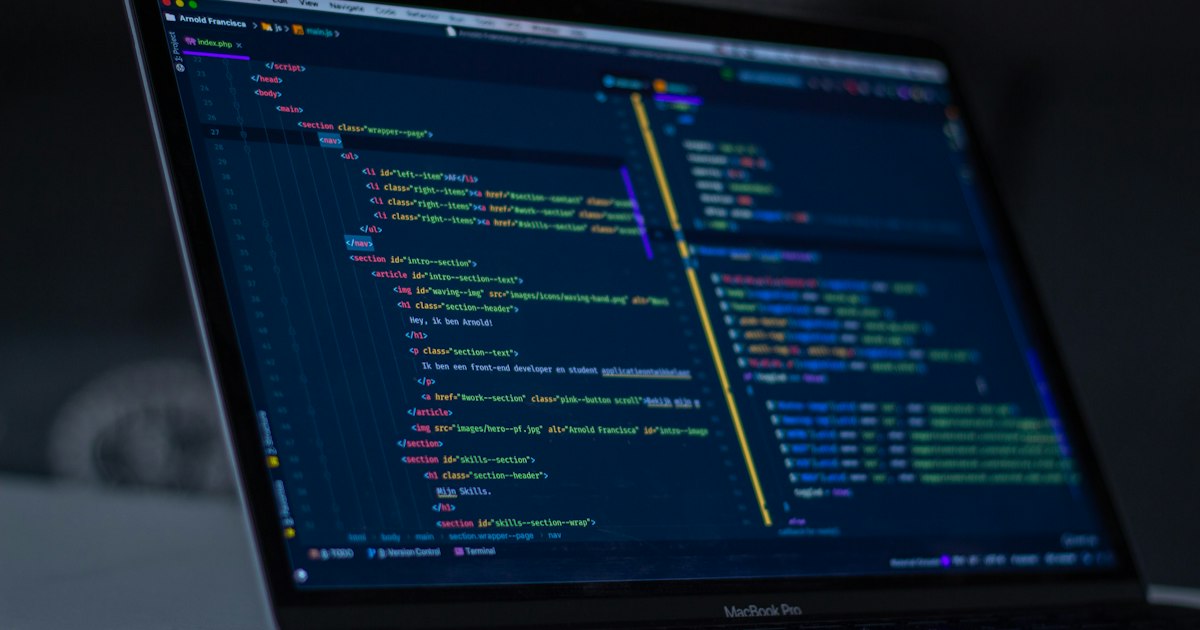
Programming Languages: The Evolving Ecosystem
Python leads with 26.98% on TIOBE index, powering 80% of AI/ML projects. JavaScript/TypeScript dominate web, while Go and Rust conquer scalable systems.
James Pérez
Solution Architect · +17 years experience · January 30, 2026
Python: The Undisputed King
Python has consolidated its position as the world's most popular language, mainly driven by the AI and Machine Learning revolution. Approximately 80% of current AI/ML projects use Python as the main language. Frameworks like TensorFlow, PyTorch, scikit-learn, and LangChain make Python the de facto standard for AI.
But Python isn't just for AI. Django and FastAPI dominate Python web backend. Pandas, NumPy, and Matplotlib are essential tools for data science. Automation scripts and devops tools also prefer Python for its clear syntax and rich ecosystem.
Python's success is due to its philosophy: "Readability counts". Its minimalist syntax and focus on programmer productivity make it ideal for rapid prototyping, education, and large projects where human collaboration is critical.
Dominant Languages by Category
Python - AI/ML/Data
Undisputed leader in artificial intelligence, machine learning, data science, and automation. 26.98% TIOBE.
JavaScript/TypeScript - Web
Dominate frontend and backend development (Node.js). TypeScript adds static typing for scalable enterprise apps.
Go - Scalable Systems
Ideal for microservices, distributed systems, and cloud-native. Efficient concurrency and performance near C.
Rust - Safe Systems
Memory safety without garbage collector. Perfect for embedded systems, blockchain, and performance-critical applications.
Java/C# - Enterprise
Maintain stronghold in legacy enterprise applications, banking, and large corporations.
Swift/Kotlin - Mobile
Swift for iOS, Kotlin for Android. Modern languages replacing Objective-C and Java respectively.
TypeScript: The Evolution of JavaScript
TypeScript has redefined modern web development. Adding static typing to JavaScript, TypeScript catches errors at compile-time, not runtime, making large applications more maintainable and robust. Vue 3, Angular, and React (with types) promote TypeScript as default.
The TypeScript ecosystem includes tools like Vite (ultra-fast build tool), tRPC (type-safe APIs without schemas), and Prisma (type-safe ORM). These tools eliminate entire categories of bugs and dramatically improve developer experience.
TypeScript in backend with Node.js, NestJS, and tsoa enables full-stack codebases with types shared between frontend and backend, eliminating mismatches that generate costly bugs.
Emerging Trends in Programming
Go for Cloud-Native
Explosive adoption of Go for microservices, Kubernetes operators, and cloud infrastructure. Simplicity + performance.
Rust for Systems
Rust conquers operating systems, blockchain (Solana), and WebAssembly. Memory safety without compromises.
Low-Code/No-Code
Searches +120% in 5 years. Platforms like Mendix, OutSystems, and Bubble democratize development without code.
WebAssembly (WASM)
Binary instruction format allowing compiled code (C++, Rust) to run in browser at near-native speed.
AI-Assisted Coding
GitHub Copilot, Cursor, and ChatGPT write up to 40-60% of code. Developers evolve to code reviewers and prompt engineers.
eBPF for Observability
Linux kernel technology for profiling, networking, and security with minimal overhead. The future of observability.
Low-Code/No-Code: The Democratization of Development
Low-code/no-code platforms have grown +120% in searches in 5 years, reflecting real demand for tools that allow creating applications without traditional programming. Mendix, OutSystems, Bubble, Airtable, and Zapier empower business users, product managers, and entrepreneurs to create solutions without depending on engineering teams.
This trend doesn't replace developers, but expands who can create software. Simple tasks (CRUD apps, internal tools, dashboards) can be built in hours, not weeks. Professional developers focus on complex problems while citizen developers solve simple problems.
The hybrid future combines the best of both worlds: low-code for rapid prototyping and MVPs, pro-code for customization and scale. Platforms that recognize this continuum will be the winners.
Actionable Recommendations for Developers
1. Master Python if you work with data or AI: The ecosystem (TensorFlow, PyTorch, Pandas, FastAPI) is unbeatable for ML/AI. If you don't know Python yet, it's the highest ROI language in 2026.
2. Learn TypeScript if you do web development: The productivity and maintainability it adds over pure JavaScript fully justifies the learning curve. Vue 3, React, and Angular favor it.
3. Consider Go for your next microservice or CLI tool: Its fast compilation, concurrency handling, and static binaries make it ideal for high-performance operations and backend.
4. Use AI-assisted coding tools as a complement: GitHub Copilot, Cursor, and Claude Code can multiply your productivity. But make sure you understand the code they generate before integrating it.
5. Contribute to open source projects in your main language: It's the best way to learn advanced patterns, connect with the community, and build a credible portfolio. Even small contributions (documentation, tests) count.
Conclusion
The programming language ecosystem in 2026 reflects the diversity of problems to solve. Python dominates AI/ML, JavaScript/TypeScript dominates the web, Go and Rust conquer critical systems, and low-code platforms democratize development for non-programmers.
The practical recommendation is not to try to master all languages, but to choose the right stack for your context and deepen it. A programmer with deep Python expertise and its AI ecosystem creates much more value than one with superficial knowledge of five languages.
And remember: languages are tools, not religions. The ability to quickly learn new languages (thanks to solid programming fundamentals and AI assistance) is now as important as mastering any specific language.
What Language Should You Learn in 2026?
What Language Should You Learn in 2026?
Topic explanation
Programming Languages 2026: Python, JavaScript and the Future of Code — an overview of why this topic matters and its main concepts.
Key background, context, and what readers should expect to learn from this article.
Why it matters
Short explanation of the real-world impact, business value, and practical relevance.
Why readers should care and how it affects decisions or daily practice.
Step-by-step solution
1) Identify the main goal or problem to solve.
2) Break the solution into clear steps and prioritize actions.
3) Implement the most impactful step first and measure results.
4) Iterate based on feedback and data.
Tools / examples
Recommended tools
Practical tools and resources to get started with the approaches described.
Example workflows
Concrete examples of how to apply the steps in real scenarios.
FAQ
What is Programming Languages 2026: Python, JavaScript and the Future of Code?
A concise definition and quick pointers to learn more.
How do I get started?
Follow the step-by-step solution and experiment with the recommended tools.