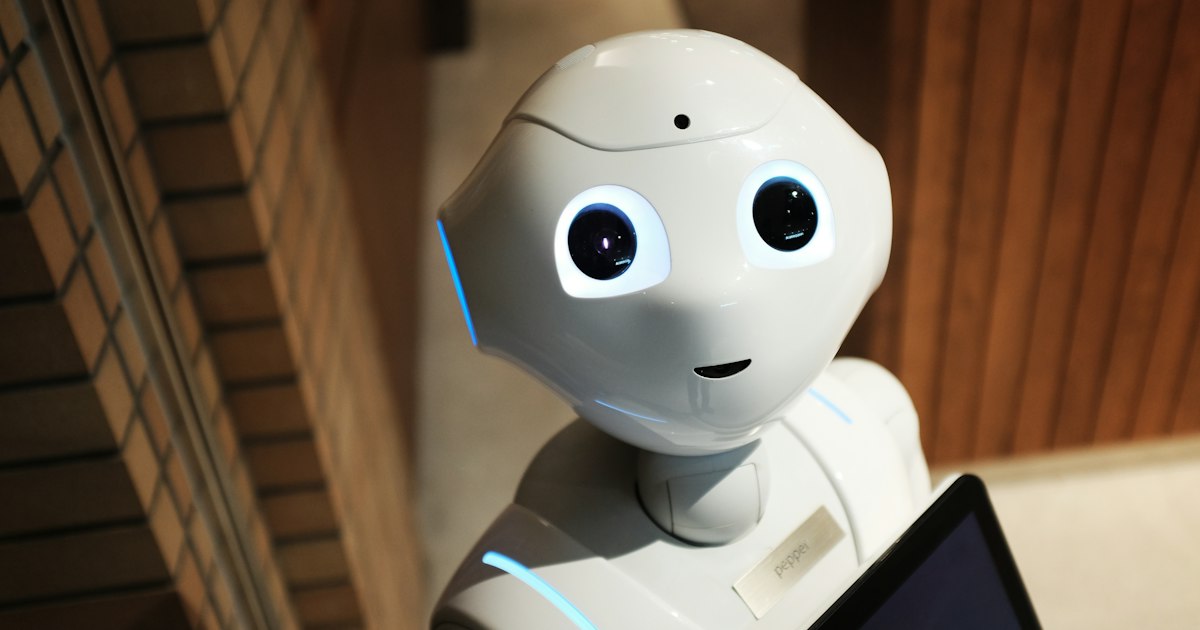
Agentic AI & Physical Intelligence: When Robots Start to Think
The evolution of artificial intelligence toward autonomous systems that perceive, reason, and act in the real world.
James Pérez
Solution Architect · +17 years experience · March 26, 2026
From Automation to Autonomy
Agentic AI brings the ability to delegate complex tasks to systems that define objectives and adapt behavior to achieve them. These agents are not simple scripts; they have limited autonomy by design.
In industrial settings this translates to robots that detect faults, replan tasks and coordinate with other systems without continuous human input. This improves uptime and allows teams to focus on higher-value work.
Physical AI is advancing toward collaborative solutions: robotic arms working alongside operators, drones carrying out detailed inspections, and autonomous vehicles handling internal logistics. These systems combine perception, control and real-time reasoning.
However, autonomy requires robust safety and ethics approaches. Defining clear operational limits, human supervision mechanisms and intervention procedures is as important as the agent's technical capabilities.
Responsible development includes controlled testing, operational safety metrics and regular audits. Organizations that balance innovation with strong controls tend to roll out agentic systems more safely and effectively.
Service applications show immediate benefits: assisted care robots in hospitals, predictive maintenance in factories and precision agriculture solutions that optimize inputs and reduce waste.
A gradual adoption strategy —starting with low-risk tasks— lets teams evaluate behavior, refine policies and build trust among users and regulators.
In short, agentic AI can transform operations, but its real impact depends on design choices that prioritize safety, transparency and human-machine collaboration.
Key Applications of Physical Agentic AI
Autonomous Industrial Robotics
Manufacturing systems that adapt operations in real-time, optimize production flows, and perform predictive maintenance.
Decision-Making Drones
Autonomous aerial vehicles navigating dynamic environments, avoiding obstacles, and executing complex missions without teleoperation.
Intelligent Humanoids
Humanoid robots integrated with multimodal AI for natural human interaction in domestic and workplace environments.
Multi-Agent Systems
Robot swarms collaborating with each other to accomplish complex tasks through autonomous coordination and direct communication.
Advanced Robotic Perception
Sensors combined with AI models for contextual environment interpretation, object recognition, and safe navigation.
Human-Robot Collaboration
Shared workspaces where agentic AI facilitates safe interaction, complementing human capabilities with robotic precision.
Impact on Industry 4.0
The convergence of agentic AI with autonomous robotics is redefining Industry 4.0. Companies adopting these technologies will gain significant competitive advantages in efficiency, quality, and time-to-market.
Autonomous systems enable 24/7 operations with minimal human supervision. This not only reduces operational costs but also improves consistency and quality in manufacturing production.
Physical AI integrated into industrial robots facilitates rapid reconfiguration of production lines, enabling agile response to market demand changes.
Key Terms
Agentic AI
AI systems capable of perception, reasoning, and autonomous action to achieve defined goals without constant intervention.
Physical AI
Integration of AI models with robotic systems and physical hardware for direct interaction with the real world.
Multi-Agent Systems
Architectures where multiple AI agents collaborate and coordinate actions to accomplish complex collective tasks.
Robotic Perception
Robot capability to interpret sensory information and build contextual understanding of the physical environment.
Agent Orchestration
Coordination of multiple autonomous AI systems working together toward common objectives in physical environments.
Self-Correcting Factory
Intelligent manufacturing system that detects anomalies, diagnoses problems, and executes corrections automatically.
The Future: Technological Convergence
By 2026, physical agentic AI will expand beyond manufacturing. We'll see applications in autonomous logistics, precision agriculture, infrastructure inspection, and robot-assisted healthcare.
The key lies in deep integration between AI cognitive capabilities and robotic physical skills. This synergy will create systems that not only think but act in the real world with increasing precision and autonomy.
Actionable Recommendations
1. Identify repetitive processes with high variability: Agentic AI delivers the most value where processes have many variations that are difficult to encode in fixed rules. Start by mapping those processes.
2. Define success metrics before the pilot: Establish KPIs such as cycle time reduction, error rate, or cost per unit. Pilots without metrics don't generate actionable learning.
3. Invest in data quality: Agentic systems are only as good as the data that feeds them. Before implementing AI, audit and improve your operational data quality.
4. Train your team in human-robot collaboration: Successful adoption requires employees to understand how to work alongside autonomous systems, not compete against them.
5. Plan governance from the start: Clearly define which decisions the autonomous system can make independently and which require human approval, especially in safety-critical contexts.
Conclusion
Agentic AI and physical robotics are not a distant future trend — they are an accelerating reality already generating competitive advantages in manufacturing, logistics, and services. Organizations that understand the difference between classical automation and genuine autonomy, and that invest in the right talent and architectures, will lead their sectors in the next decade.
The first step is always informed exploration: evaluate a specific use case in your industry, design a measurable pilot, and define success criteria before scaling. Agentic AI rewards informed iteration over rushed mass adoption.
Ready to explore how agentic AI can transform your processes? Contact James Pérez for a no-commitment strategic evaluation session.
Ready for the Future of Agentic AI?
Ready for the Future of Agentic AI?
Topic explanation
Agentic AI & Physical Intelligence: The Robotics Revolution of 2026 — an overview of why this topic matters and its main concepts.
Key background, context, and what readers should expect to learn from this article.
Why it matters
Short explanation of the real-world impact, business value, and practical relevance.
Why readers should care and how it affects decisions or daily practice.
Step-by-step solution
1) Identify the main goal or problem to solve.
2) Break the solution into clear steps and prioritize actions.
3) Implement the most impactful step first and measure results.
4) Iterate based on feedback and data.
Tools / examples
Recommended tools
Practical tools and resources to get started with the approaches described.
Example workflows
Concrete examples of how to apply the steps in real scenarios.
FAQ
What is Agentic AI & Physical Intelligence: The Robotics Revolution of 2026?
A concise definition and quick pointers to learn more.
How do I get started?
Follow the step-by-step solution and experiment with the recommended tools.